Introduction
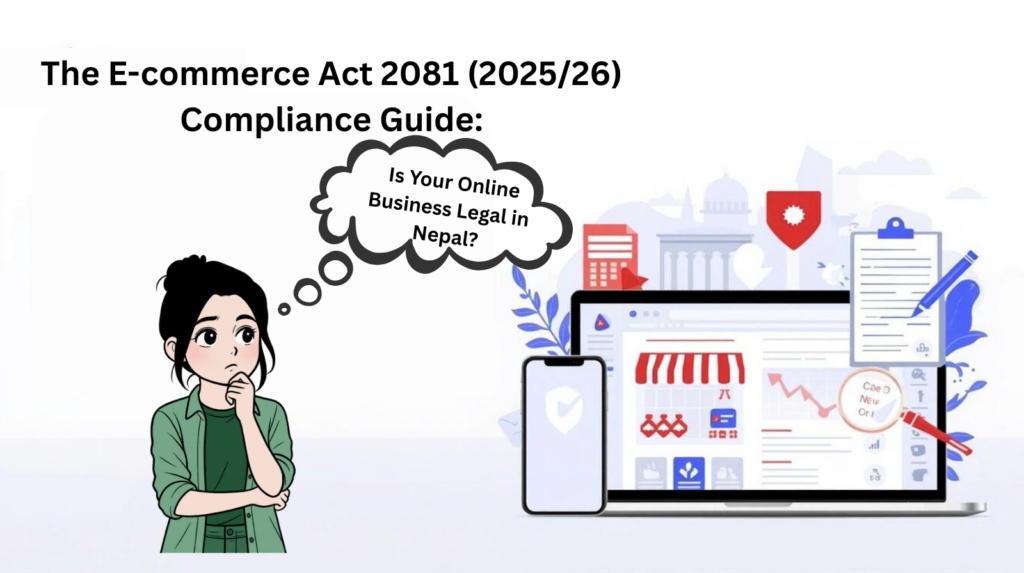
Are you selling products or services online in Nepal? From a small Instagram boutique to a large e-commerce platform, if you use the internet for business, you need to pay attention to Nepal’s E-commerce Act 2081 (2025/26). This new law, effective from Bhadra 1, 2081 (approx. August 17, 2024), makes it mandatory for almost every online business to register and follow specific rules. Ignoring it could lead to significant fines!
This guide will break down the new E-commerce Act into simple terms, explain exactly what you need to do to comply, and help you avoid penalties. Let’s make sure your online venture is not just successful, but also fully legal.
Why the New E-commerce Act 2081?
For years, online shopping in Nepal grew without many specific rules. This led to issues like fake products, unfair returns and consumer complaints. The government introduced the E-commerce Act 2081 to bring order, protect consumers and create a level playing field for businesses. It’s essentially the rulebook for buying and selling online in Nepal.
Key Goals of the Act:
- Consumer Protection: Ensuring buyers get what they paid for and have recourse for complaints.
- Business Accountability: Making online sellers responsible for their products and services.
- Fair Competition: Preventing unfair trade practices online.
- Economic Regulation: Bringing online transactions into the formal economy.
Who Needs to Comply?
This is the most crucial question. The E-commerce Act 2081 applies to a wide range of online activities. Simply put, if you use a digital platform to sell goods or services to customers in Nepal, this Act likely applies to you.
This includes:
- E-commerce Platforms: Big websites like Daraz, SastoDeal, and other online marketplaces.
- Online Stores: Your own website where you sell products (e.g., clothing, electronics).
- Social Media Sellers: If you sell through Facebook Pages, Instagram Shops, TikTok, or Viber groups.
- Online Service Providers: Tutors, consultants, web designers, or anyone offering services through the internet.
- Digital Content Sellers: People selling e-books, online courses, or digital art.
Important Distinction: If you are only advertising online but the actual sale and payment happen offline, you might not be directly covered by all sections of this Act, but general consumer protection laws still apply. However, most online transactions now involve digital payments, making the Act relevant.
What Are the Key Requirements of the E-commerce Act 2081?
To comply with the new Act, online businesses need to focus on a few core areas like registration, transparency, consumer rights and data protection.
1. Mandatory Registration with the Department of Commerce, Supplies and Consumer Protection (DoCSCP)
This is the biggest change! Every online business, regardless of size, must now register with the Department of Commerce, Supplies and Consumer Protection (DoCSCP).
Steps for Registration:
- Existing Business Registration: First, ensure your business is already registered with the Office of Company Registrar (for Pvt. Ltd. companies) or Inland Revenue Department (for Proprietorships/Partnerships). If not, Karsansar can help you with your initial Company Registration in Nepal 2026.
- Online Application: The DoCSCP will introduce an online portal for e-commerce business registration. You will need to submit details about your business, products, payment methods and contact information.
- Necessary Documents: Expect to provide your Company Registration Certificate (or PAN/VAT certificate), citizenship of owner/directors and a description of your online operations.
Why is this crucial? Without this registration, your online business will be operating illegally.
2. Enhanced Transparency and Information Disclosure
The Act demands that online sellers provide clear and complete information to consumers. This helps build trust and prevents misunderstandings.
- Seller Information: You must display your full legal business name, address, contact details (phone, email) and registration numbers (PAN/VAT, DoCSCP registration number) prominently on your website or social media page.
- Product/Service Information:
- Accurate Descriptions: Goods and services must be described accurately, including specifications, features and intended use.
- Pricing: The final price, including all taxes and delivery charges, must be clearly displayed. No hidden costs!
- Availability: Clearly state if a product is in stock or if there will be a delay.
- Terms and Conditions: You need clear, accessible terms and conditions for sale, delivery, payment and returns.
3. Consumer Rights and Protection (Returns, Refunds and Complaints)
The Act significantly strengthens consumer rights for online purchases.
- Right to Information: Consumers have the right to all relevant information before making a purchase.
- Right to Quality: Products must be of acceptable quality and fit for their advertised purpose.
- Return and Refund Policy: You must have a clear policy for returns, refunds and exchanges.
- General Rule: Consumers typically have a right to return defective or misrepresented goods within a reasonable period (often 7 days) for a full refund or exchange.
- Damaged Goods: If goods are damaged during delivery, the seller is generally responsible.
- Complaint Mechanism: You must provide an easily accessible way for customers to lodge complaints (e.g., a dedicated email, phone number or online form).
4. Data Protection and Privacy
While Nepal does not have a Data Protection Act yet, the E-commerce Act includes provisions for protecting consumer data.
- Consent: You must obtain explicit consent from consumers before collecting or using their personal data (e.g., name, address, phone number).
- Secure Handling: You are responsible for securely storing consumer data and preventing unauthorized access or data breaches.
- Limited Use: Data collected should only be used for the purpose for which it was collected (e.g., fulfilling an order). You cannot sell customer data without their explicit permission.
5. Rules for Online Payments
The Act provides a framework for secure online transactions.
- Licensed Payment Gateways: You must use payment gateways or methods that are licensed by Nepal Rastra Bank (NRB).
- Security: Ensure your payment process is secure to protect customer financial information.
Penalties for Non-Compliance
Ignoring the E-commerce Act 2081 can lead to serious consequences. Penalties vary depending on the severity and nature of the violation.
- Monetary Fines: Expect fines ranging from NPR 50,000 to NPR 300,000 (Fifty Thousand to Three Lakhs Rupees) for various breaches, such as operating without registration, misrepresentation of products or failure to address consumer complaints.
- Business Suspension: In severe cases, especially for repeat offenders or fraudulent activities, your online business operations could be temporarily or permanently suspended.
- Reputational Damage: Beyond legal penalties, operating illegally can severely damage your brand’s reputation and consumer trust.
What’s Next?
Navigating new laws can be confusing and time consuming, especially when you are busy running your business. Karsansar specializes in helping businesses like yours achieve full legal compliance in Nepal.
We can assist you with:
- Initial Business Registration: If you’re starting fresh, we can help you register your Private Limited Company or Proprietorship.
- DoCSCP E-commerce Registration: We will guide you through the online application process once the portal is fully operational.
- Compliance Audit: Reviewing your current online setup to ensure it meets all the transparency and disclosure requirements.
- Drafting Policies: Helping you create clear Terms & Conditions, Privacy Policies, and Return Policies that comply with the Act.
- General Legal Advisory: Answering all your questions about the E-commerce Act and other business laws in Nepal.
Don’t let legal complexities hinder your online success. Ensure your business is compliant and secure.Ready to make your online business fully compliant and stress-free? Contact Karsansar Today